Easy Spider Web Rain Droplet Suncatcher Free Pattern
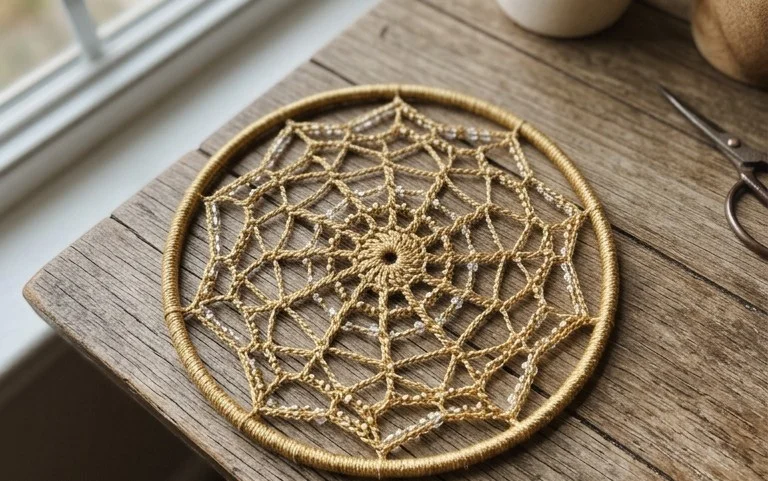
Catching the morning light through a window, this crochet piece mimics the delicate geometry of a damp spider web after a storm. It features a soft, airy structure that highlights clear glass beads resembling morning dew. This project appeals to beginners because it relies on basic chain loops and double crochet clusters to build a circular shape. You will learn how to transition between open-mesh netting and bead placement to create a balanced weight. Making this suncatcher is a quiet, rhythmic activity that turns leftover cotton thread into a light-catching decor piece that glows in any sunny room.
Why You’ll Love This Pattern
This classic crochet dishcloth relies on the durable linen stitch, which creates a dense yet flexible fabric that excels at scrubbing stubborn dishes. Because the pattern uses a simple repeating sequence of chains and single crochets, it works up quickly and becomes a rhythmic, meditative process perfect for evening relaxation. You can complete an entire cloth in one sitting, making these an efficient way to use up cotton yarn remnants from larger projects. The resulting texture is naturally nubby, providing the necessary friction to clean surfaces without needing harsh synthetic sponges.
I managed to finish three of these during a weekend trip. The instructions are very clear about where to place the hook in the chain spaces, which saved me from accidentally increasing my row counts by mistake.
— Sarah, home crafter
Pattern Overview & Skill Level
- Skill Level: Beginner
- Approximate Time: 45 to 60 minutes
- Construction: Worked flat in rows with a turning chain
- Finished Dimensions: 8 inches by 8 inches
Materials & Supplies Needed
- Yarn: Worsted weight (#4), 100% cotton, approximately 75 yards. Cotton is required for its absorbency and heat resistance.
- Hook Size: 5.0 mm (H-8)
- Notions: Tapestry needle for weaving in ends, scissors, and an optional locking stitch marker to track the start of rows.
- Yarn Substitutions: You may use a cotton-acrylic blend, though it will be less absorbent than pure cotton. Avoid wool, as it will felt during washing and lose its scrubby texture.
Stitch Guide & Abbreviations (US Terms)
- ch: Chain
- sc: Single crochet
- st/sts: Stitch/stitches
- sk: Skip
- sp: Space (the gap created by a chain)
- Linen Stitch: Also known as the moss stitch, this involves working a single crochet into the chain-space of the previous row.
Step-by-Step Pattern Instructions
This dishcloth is worked from the bottom up. The linen stitch pattern requires an even number of chains to ensure the edges remain straight.
Foundation and Main Body
- Foundation: Ch 32.
- Row 1: Sc in the 4th ch from the hook, *ch 1, sk 1 ch, sc in the next ch; repeat from * until the end of the row. Turn. (16 sts)
- Row 2: Ch 2, sc in the first ch-1 space, *ch 1, sk 1 sc, sc in the next ch-1 space; repeat from * ending with a sc in the final turning chain space. Turn. (16 sts)
- Rows 3–30: Repeat Row 2 until the piece measures 8 inches in height.
Finishing
After completing Row 30, do not fasten off immediately. Work a round of single crochet stitches around the entire perimeter of the square to give the cloth a polished, finished edge. Place 3 sc in each corner to allow the yarn to turn smoothly without puckering. Once you return to the starting corner, slip stitch into the first sc, fasten off, and use a tapestry needle to weave your yarn tail securely into the back of the work.
Care & Washing Instructions
- Machine wash in warm water on a gentle cycle to prevent excessive tangling with other items.
- Tumble dry on low heat or lay flat on a drying rack to maintain the original square shape.
- Avoid using fabric softener, as it leaves a residue that reduces the cotton’s ability to absorb water and clean surfaces.
Pro Tips & Common Mistakes to Avoid
Maintain consistent tension throughout the project, especially on the turning chain. If your chain stitches are too tight, the edges of your cloth will curl inward instead of lying flat. Use a stitch marker on the first stitch of every row to ensure you are catching the final chain space correctly, as missing that space is the most common reason for unintentional decreases. When weaving in your ends, run the needle through the center of the stitches rather than along the surface to keep the repair invisible. If you decide to adjust the size, remember that each additional inch in width will require approximately 10 extra yards of yarn.
Frequently Asked Questions
Can I make this dishcloth larger by adding more chains?
Yes, you can increase the size by adding any even number of chains to your foundation row. Keep in mind that a larger cloth will require more than one skein of standard 100g cotton yarn.
Why does my cloth look like a triangle instead of a square?
If the edges are pulling in, you are likely skipping stitches or missing the final chain-space at the end of your rows. Always count your stitches at the end of each row to ensure you have 16 total stitches throughout the pattern.
Is this pattern suitable for someone who has never crocheted before?
Absolutely. The linen stitch is an excellent way to practice basic stitch placement and tension control without needing to understand complex increases or decreases.
Can I sell the dishcloths I make from this pattern?
You are welcome to sell items made from this design. Please credit the original pattern source when listing your items online to support the community.
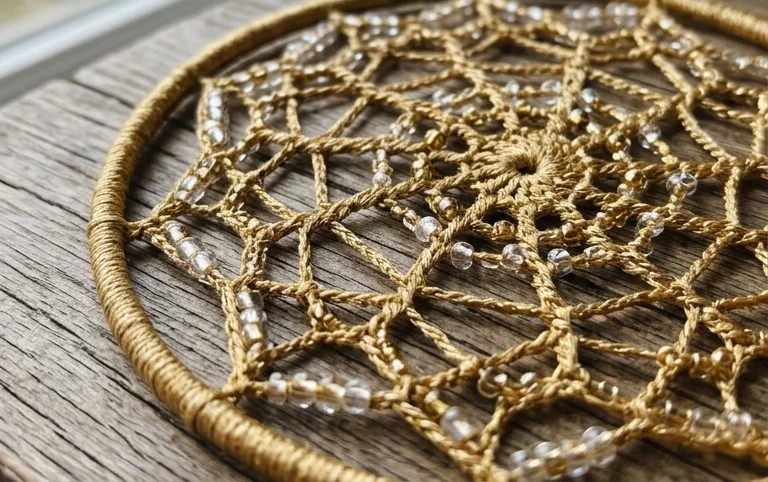
Watching the light refract through those beads brings a sense of calm to a corner of your home. You can swap out the white thread for a variegated blue or green yarn to mimic a rainy day palette or adjust the hook size for a larger statement piece. Post a photo of your finished work on social media to show how the light hits your creation, and feel free to browse the rest of the blog for more free patterns to fill your afternoon.