Easy Crochet Baby Washcloth: Free Beginner Pattern
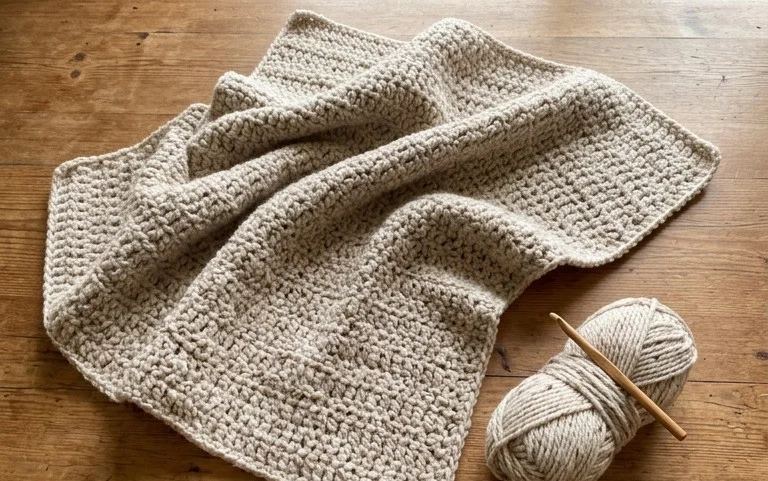
A square of cotton worked in single crochet makes a washcloth with a close, even texture and tidy edges. This pattern uses simple rows, so beginners can practice steady tension and counting without joining rounds or sewing pieces together. The finished cloth measures about 8 inches square and is useful at the sink, in a baby-care basket, or tucked into a handmade gift. Choose a smooth cotton yarn that feels comfortable against delicate skin, and wash it before use according to the yarn label. The small size makes the project satisfying to finish in a few focused sittings, while the repeating stitch keeps the work easy to pick up again. Along the way, you’ll find the materials, gauge, and row instructions, plus practical tips for keeping the edges straight and adjusting the finished size.
Why You’ll Love This Pattern
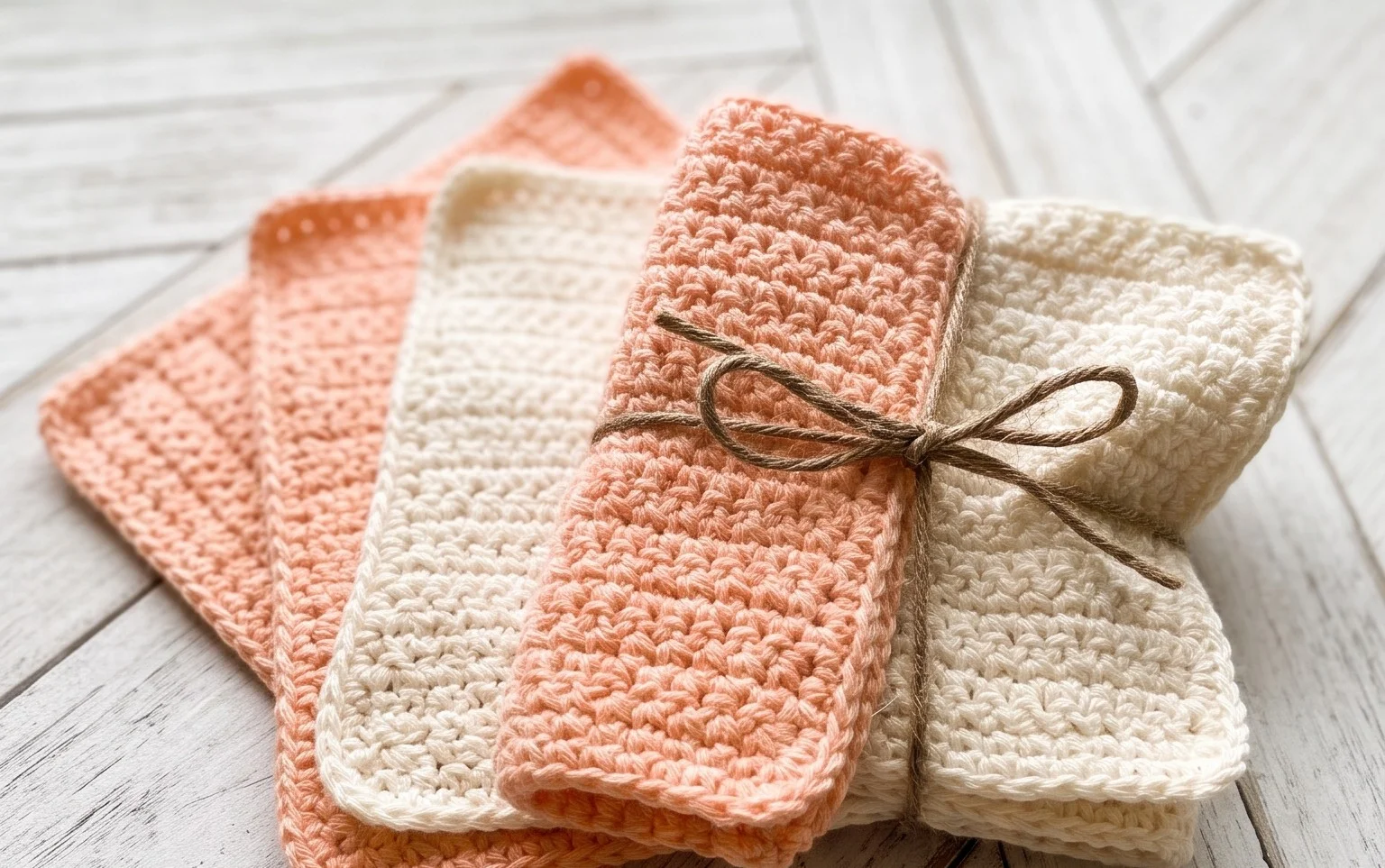
A firm cotton dishcloth is handy beside the sink, and this one is worked flat in simple single crochet rows. The square shape makes it easy to keep the edges straight, while the dense fabric gives you a useful cloth that can be washed and reused.
The pattern suits a first crochet project because it uses one stitch throughout. It is also a manageable way to practice steady tension and counting without needing to join rounds or sew pieces together. One ball of worsted cotton is usually enough, so you can use a partial skein. Make the cloth in a few focused sittings, or work a row at a time when you have a short break.
The rows were easy to follow, and I liked having a simple project for practicing even stitches. My finished cloth came out close to the listed size.
— Jamie, beginner crocheter
Pattern Overview & Skill Level
- Skill Level: Beginner. You need to know how to chain and make a single crochet stitch.
- Approximate Time: 2–3 hours, depending on your pace and how often you stop to check your row count.
- Construction: A flat square worked back and forth in rows, then finished by fastening off and weaving in the ends.
- Finished Dimensions & Sizing: About 8 × 8 in (20 × 20 cm), after washing and drying flat. Gauge is 15 single crochet stitches and 15 rows over 4 in (10 cm).
Gauge affects the cloth’s final size and feel. Make a small swatch if you want to check yours: with the recommended yarn and hook, a 4-inch section should measure about 15 stitches wide and 15 rows high. A slightly different gauge is fine for a dishcloth, though it will change the finished measurements.
Materials & Supplies Needed
- Yarn: About 70 yd (64 m) of worsted-weight cotton yarn, category #4, in one color. Choose a smooth, absorbent cotton that can tolerate frequent washing.
- Hook Size: 5.0 mm / H-8 crochet hook. Use a hook that lets you reach the stated gauge while keeping the fabric firm but flexible.
- Notions: Tapestry needle for weaving in the ends, scissors, and a ruler or tape measure. A stitch marker is optional for marking the first stitch of a row.
- Substitutions: A cotton-linen blend can work, but it may make the cloth drape more and feel less springy. Use a similar-weight yarn and check the care label. Acrylic is less absorbent and can feel different at the sink. A different yarn weight or hook may change the size and yardage needed.
Stitch Guide & Abbreviations (US Terms)
- ch = chain.
- sc = single crochet.
- st = stitch; sts = stitches.
- turn = rotate the work so you can crochet back across the previous row.
- Single crochet: Insert the hook into the stitch, yarn over and draw up a loop, yarn over again and pull through both loops on the hook.
The turning chain at the start of each row does not count as a stitch. Work the first single crochet into the first stitch of the row, not into the turning chain. This keeps the edges straight and preserves the 30-stitch count.
Step-by-Step Pattern Instructions
Dishcloth
- Foundation: Ch 31. This chain is the foundation and does not count as a row.
- Row 1: Sc in the second ch from the hook and in each ch across. Turn. (30 sts)
- Row 2: Ch 1, sc in each st across. Turn. (30 sts)
- Row 3: Ch 1, sc in each st across. Turn. (30 sts)
- Row 4: Ch 1, sc in each st across. Turn. (30 sts)
- Row 5: Ch 1, sc in each st across. Turn. (30 sts)
- Row 6: Ch 1, sc in each st across. Turn. (30 sts)
- Row 7: Ch 1, sc in each st across. Turn. (30 sts)
- Row 8: Ch 1, sc in each st across. Turn. (30 sts)
- Row 9: Ch 1, sc in each st across. Turn. (30 sts)
- Row 10: Ch 1, sc in each st across. Turn. (30 sts)
- Row 11: Ch 1, sc in each st across. Turn. (30 sts)
- Row 12: Ch 1, sc in each st across. Turn. (30 sts)
- Row 13: Ch 1, sc in each st across. Turn. (30 sts)
- Row 14: Ch 1, sc in each st across. Turn. (30 sts)
- Row 15: Ch 1, sc in each st across. Turn. (30 sts)
- Row 16: Ch 1, sc in each st across. Turn. (30 sts)
- Row 17: Ch 1, sc in each st across. Turn. (30 sts)
- Row 18: Ch 1, sc in each st across. Turn. (30 sts)
- Row 19: Ch 1, sc in each st across. Turn. (30 sts)
- Row 20: Ch 1, sc in each st across. Turn. (30 sts)
- Row 21: Ch 1, sc in each st across. Turn. (30 sts)
- Row 22: Ch 1, sc in each st across. Turn. (30 sts)
- Row 23: Ch 1, sc in each st across. Turn. (30 sts)
- Row 24: Ch 1, sc in each st across. Turn. (30 sts)
- Row 25: Ch 1, sc in each st across. Turn. (30 sts)
- Row 26: Ch 1, sc in each st across. Turn. (30 sts)
- Row 27: Ch 1, sc in each st across. Turn. (30 sts)
- Row 28: Ch 1, sc in each st across. Turn. (30 sts)
- Row 29: Ch 1, sc in each st across. Turn. (30 sts)
- Row 30: Ch 1, sc in each st across. (30 sts)
Finishing
Cut the yarn, leaving a tail long enough to sew in, and pull it through the last loop to fasten off. Thread the tail onto a tapestry needle and weave it through several stitches on the wrong side. Change direction once before trimming the excess. Weave in the foundation tail the same way. Measure the cloth; it should be close to 8 inches square at the stated gauge.
Care & Washing Instructions
- For cotton yarn, wash in a machine on a warm cycle, up to 40°C (104°F), or follow the yarn label if it gives a lower limit.
- Dry flat when practical; reshape the damp cloth by easing the edges square with your hands.
- Block lightly while damp if the edges curl, and let the cloth dry fully before storing it.
Pro Tips & Common Mistakes to Avoid
- Keep your tension relaxed and consistent. If the foundation chain is much tighter than the rows, the bottom edge may pull inward; make the chain with a slightly larger hook if needed.
- Count the stitches at the end of each row. A stitch marker in the first stitch can help you spot the edge, especially when the turning chain does not count.
- Weave in each end on the wrong side, passing the needle through the yarn strands of several stitches. Avoid pulling the tail so tight that the edge puckers.
- For a larger cloth, add an even number of foundation chains and work extra rows to match the new width. Larger dimensions use more yarn, so start with an extra ball if you are increasing the cloth substantially.
Frequently Asked Questions
Can I use a different yarn fiber?
Yes, but cotton is a practical choice because it absorbs water and handles regular washing. A cotton-linen blend may feel less springy, while acrylic tends to absorb less. Check the yarn label for care instructions and expect the cloth’s texture or size to differ.
How can I make the dishcloth larger or smaller?
Change the foundation chain to adjust the width, then add or remove rows to adjust the height. Keep the turning chain out of the stitch count. A larger cloth takes more yarn, and changing yarn weight or hook size also changes the finished measurements.
Is this pattern suitable for a first crochet project?
Yes. It uses chains and single crochet stitches in straight rows, with no shaping or joining. Count 30 stitches after each row and check that the edges stay even. If the sides slope, look for a missed first stitch or an extra stitch at the end.
May I sell dishcloths made from this pattern?
Check the designer’s terms before selling finished items, and follow any rules about pattern credit, product listings, or commercial use. Do not sell or repost the written pattern unless the designer allows it.
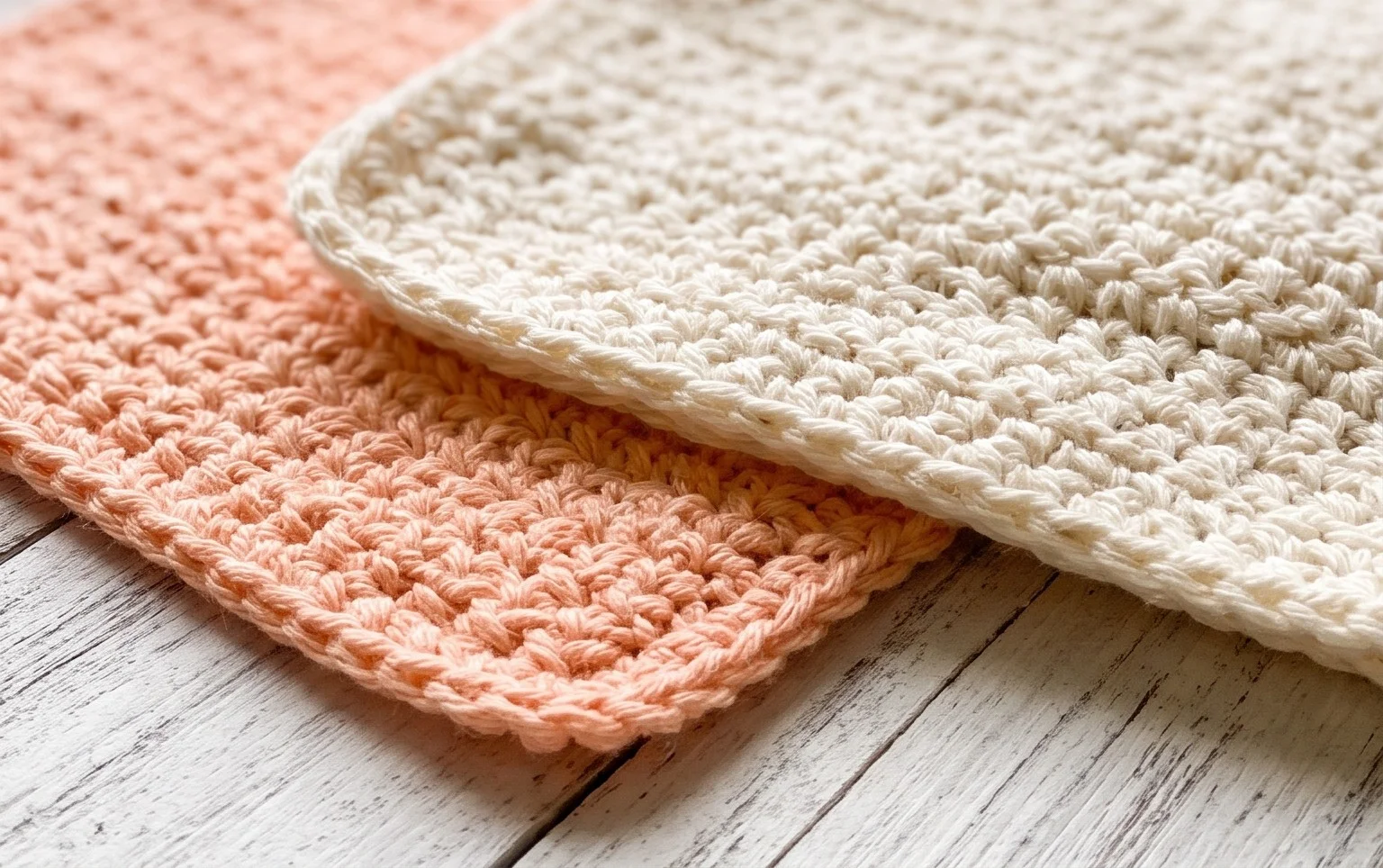
Your finished square is a practical little project, with neat rows and a useful texture that makes it easy to reach for at the sink or add to a baby-care basket. For a simple variation, work the same pattern in a soft pastel cotton or choose a gentle stripe by changing colors every few rows. Be sure to use a yarn that is comfortable for its intended use and follow its care instructions when washing the cloth. If you make one, share a photo on Pinterest or your favorite social platform so other crocheters can see your color choice. Then explore more free crochet patterns on the blog for your next small project.